Most writers edit the way they were taught in school.
Find the errors. Fix the grammar. Clean up the sentences.
And yes, that matters. But it’s the last thing to worry about. Not the first.
The editing work that actually changes a book happens earlier, at the structural level. That’s where you ask: does this thing move? Does the reader feel pulled forward, or are they quietly losing interest without knowing why?
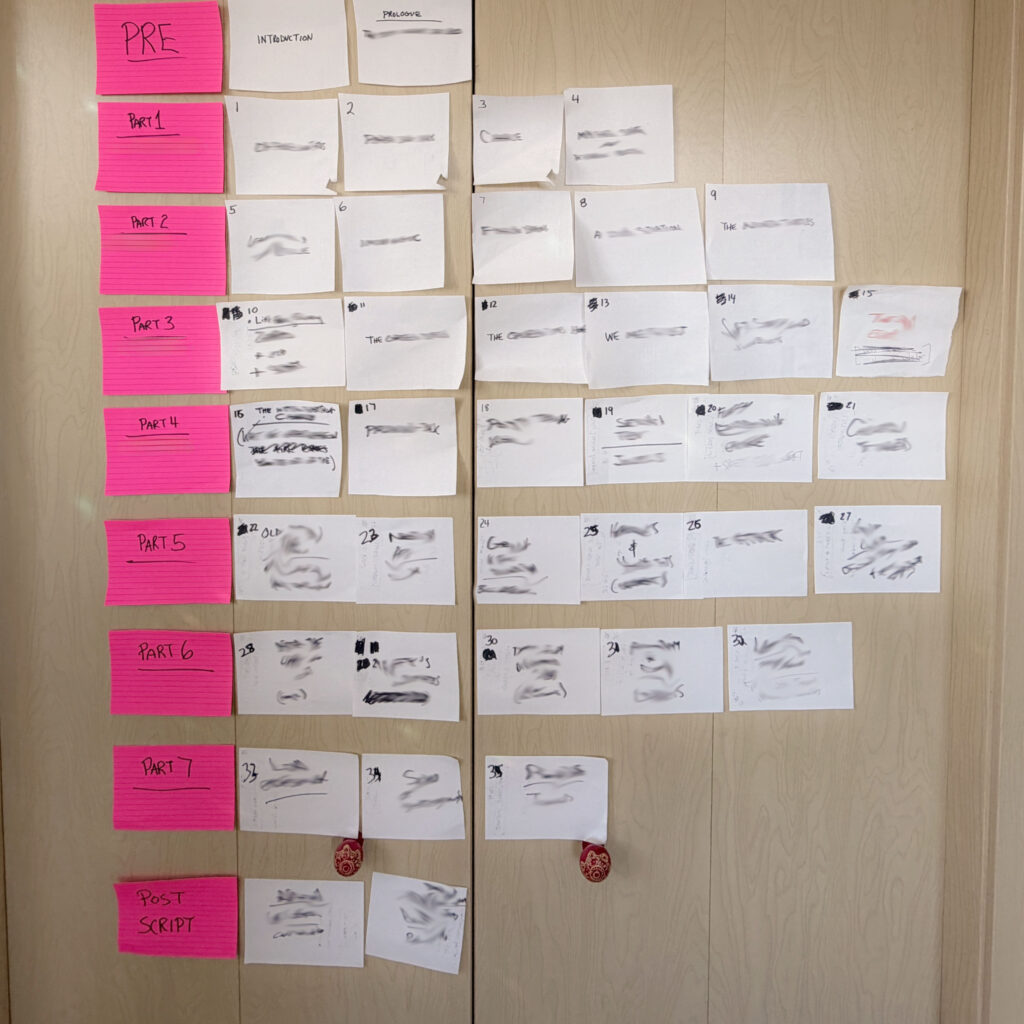
I’m in the final edit of my current book project. My office wall is covered in index cards. One per chapter. Laid out so I can see the whole thing at once, in movable parts.
Not because something’s wrong. Because flow is almost impossible to feel on a screen. You need distance. You need to see the shape of the thing.
At this stage I’m not asking “is this chapter good?” I figured that out in earlier drafts. Now I’m asking something subtler: how does it feel to arrive at this point in the book, and then leave it?
That question catches things grammar never will.
Two chapters with the same emotional tone sitting back to back. A transition that’s technically correct but doesn’t give the reader a breath. A section that rushes where the reader needs to slow down.
None of that is broken. It just needs adjustment.
If you’re working on a nonfiction book and feel like something’s off but can’t name it, it’s probably structure, not skill.
The Draft to Done Self-Editing System was built for exactly this. 55 editing moves, designed to walk you through your manuscript in the right order.
Check it out here: tashai.net/edit-your-book
And if you want more of this in your inbox every week: tashai.net/subscribe